Geometric Wolf and Fox Head Design: Practical Applications for Modern Makers
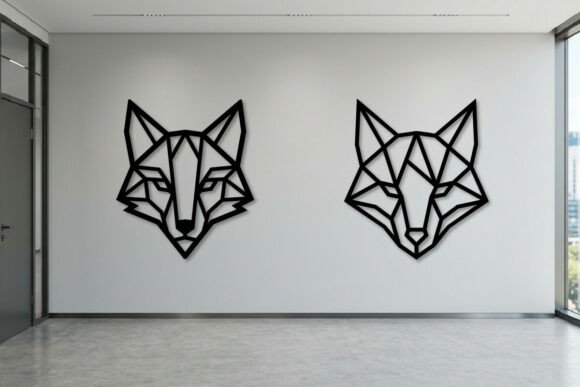
The intersection of wildlife aesthetics and mathematical precision has created a distinct niche in modern design, best exemplified by the geometric wolf and fox head design. This style moves away from traditional, realistic portraiture in favor of bold black line art characterized by sharp facets and clean symmetry. For creators working with laser cutters, CNC routers, or digital printing platforms, this specific visual language offers a unique advantage: it translates complex organic forms into manageable, structurally sound vectors. Unlike intricate illustrations that may fail during fabrication due to fragile details, these polygonal designs are engineered for durability and clarity across various mediums.
Why Faceted Line Art Works for Digital Fabrication
When you load a premium vector silhouette set into software like Adobe Illustrator, Cricut Design Space, or LightBurn, the quality of the path data dictates the success of the final product. Geometric animal heads are inherently compatible with digital fabrication because they rely on straight lines and defined angles rather than unpredictable curves. For a small business owner producing wooden wall art, this means faster cutting times and less material waste. The sharp facets create natural break points that prevent wood from splintering, a common issue with highly detailed organic silhouettes.
This technical reliability extends to metal work as well. Plasma cutters and fiber lasers require designs that account for heat distortion and kerf width. A geometric fox head with bold line art provides enough negative space to maintain structural integrity when cut from steel or aluminum. The symmetry ensures that even if minor thermal warping occurs, the overall composition remains balanced and visually intentional. This makes the design style not just an aesthetic choice, but a practical engineering solution for manufacturers creating durable outdoor signage or industrial-chic interior decor.
Elevating Interior Spaces with Wooden Wall Art
Home decor enthusiasts and professional interior designers frequently turn to geometric wolf and fox head designs to anchor a room’s theme without overwhelming it. In a Scandinavian or minimalist setting, the stark contrast of black line art against light birch or maple plywood creates a focal point that feels both organic and architectural. Because the design relies on geometry rather than shading, it interacts beautifully with natural light. As shadows shift throughout the day, the faceted planes appear to change depth, giving a static piece of wood a dynamic quality.
For DIY hobbyists tackling their first large-scale project, this style is forgiving. If you are staining or painting individual facets before assembly, the clean lines act as natural boundaries, reducing the need for meticulous taping. Entrepreneurs selling on platforms like Etsy have found that offering these designs in multiple sizes allows customers to customize arrangements for different wall dimensions. A trio of geometric animal heads displayed horizontally above a sofa creates a gallery effect that feels curated yet accessible, bridging the gap between rustic cabin vibes and contemporary urban lofts.
Commercial Branding and Merchandise Adaptability
Beyond home decor, the versatility of high-resolution SVG and EPS formats makes these designs valuable assets for commercial branding. Outdoor apparel companies, craft breweries, and tech startups often seek imagery that conveys traits like intelligence, adaptability, and wildness without appearing cartoonish. A geometric wolf head serves as a sophisticated logo mark or merchandise graphic that scales perfectly from a business card to a storefront banner. The vector format ensures that edges remain crisp regardless of size, which is critical for maintaining brand professionalism.
Print-on-demand sellers benefit significantly from the included PNG and JPG formats. When designing t-shirts, hoodies, or stickers, the bold black line art provides excellent contrast on both light and dark fabrics. Unlike photorealistic images that can look muddy after washing, high-contrast geometric prints tend to age better. Marketers can also use these assets in social media templates or website headers to establish a cohesive visual identity. The modern, angular aesthetic signals innovation and forward-thinking, making it particularly relevant for brands targeting millennials and Gen Z consumers who appreciate design-conscious products.
Custom Tattoo Art and Personal Expression
Tattoo artists and clients looking for meaningful body art often struggle to find designs that balance symbolism with longevity. Realistic animal portraits can blur over time as ink spreads under the skin, but geometric wolf and fox head designs age exceptionally well. The bold lines and open negative space ensure the tattoo remains legible decades later. Clients seeking to represent guidance, loyalty, or cunning often prefer this stylized approach because it feels more personal and less generic than stock imagery.
For artists, having a premium vector set serves as an excellent reference library or stencil base. The clean symmetry allows for easy modification; an artist might elongate certain facets to fit the contour of a forearm or integrate other geometric elements like mandalas or topographic lines. Because the files are fully editable vectors, resizing and adjusting line weights takes seconds rather than hours of redrawing. This efficiency allows tattoo professionals to offer custom consultations at a reasonable price point while delivering high-quality, bespoke artwork that resonates deeply with the wearer.
Educational and Community Workshop Applications
Educators and workshop leaders teaching digital fabrication or design principles find geometric animal heads to be ideal pedagogical tools. The combination of recognizable subject matter with abstract execution helps students grasp concepts like tessellation, positive/negative space, and vector node management. In a classroom setting, students can deconstruct the SVG files to understand how complex shapes are built from simple polygons. This hands-on analysis bridges the gap between theoretical geometry and applied art, making abstract math concepts tangible and engaging.
Community makerspaces often host "make-and-take" events where participants create something meaningful in a single session. A geometric fox head cut from 3mm plywood can be assembled, stained, and finished within two hours, providing immediate gratification for beginners. The predictable nature of the design reduces frustration and equipment errors, allowing instructors to focus on safety and technique rather than troubleshooting failed cuts. These projects also serve as excellent fundraising items for schools or non-profits, as the low material cost and high perceived value generate significant margins.
Critical Considerations Before Downloading or Purchasing
While the aesthetic appeal of geometric wolf and fox head designs is evident, users must evaluate technical specifications before committing to a file set. Always verify that the vectors are truly closed paths; open lines will cause laser cutters to stop mid-job or produce incomplete engravings. Check the layer organization in the source file—well-organized layers separate cut lines from score lines and engraving fills, saving hours of prep work. For commercial users, carefully review the licensing terms to distinguish between personal use rights and full commercial redistribution privileges.
Material selection should also influence your design choice. A geometric fox head with extremely thin connecting points may work beautifully on acrylic but could snap easily when cut from grain-heavy oak. Test cuts on scrap material are essential when adapting these designs for new substrates. Additionally, consider the resolution of raster files if you plan to use them for print. While vectors scale infinitely, the included PNG and JPG files should be at least 300 DPI at your intended print size to avoid pixelation. Understanding these technical nuances ensures that the transition from digital file to physical object is seamless, whether you are creating a single piece of wall art or launching a new product line.
Ultimately, the enduring popularity of this design style stems from its ability to serve multiple masters simultaneously. It satisfies the maker's need for fabrication-friendly geometry, the designer's desire for scalable versatility, and the end user's appreciation for modern symbolism. By choosing a premium vector silhouette set that prioritizes clean topology and broad format compatibility, creators equip themselves with a foundational asset that can evolve alongside their skills and business needs. Whether etched into glass, printed on canvas, or inked onto skin, the geometric wolf and fox head remains a testament to the power of structured creativity in an increasingly digital craft landscape.